The key point
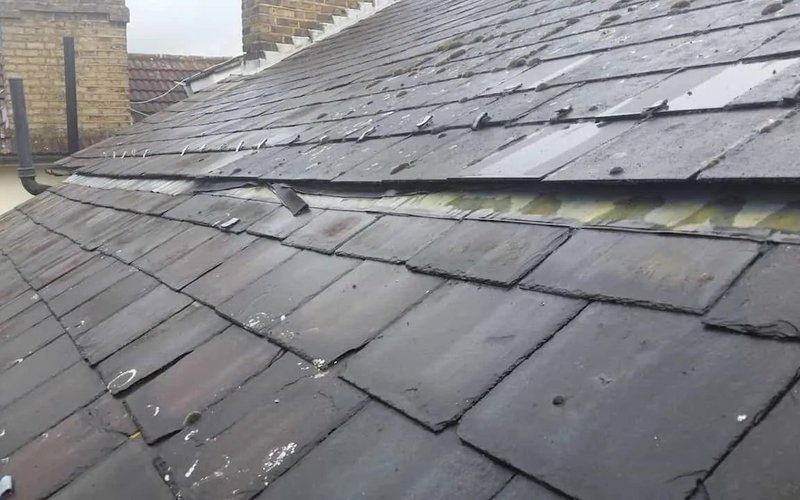
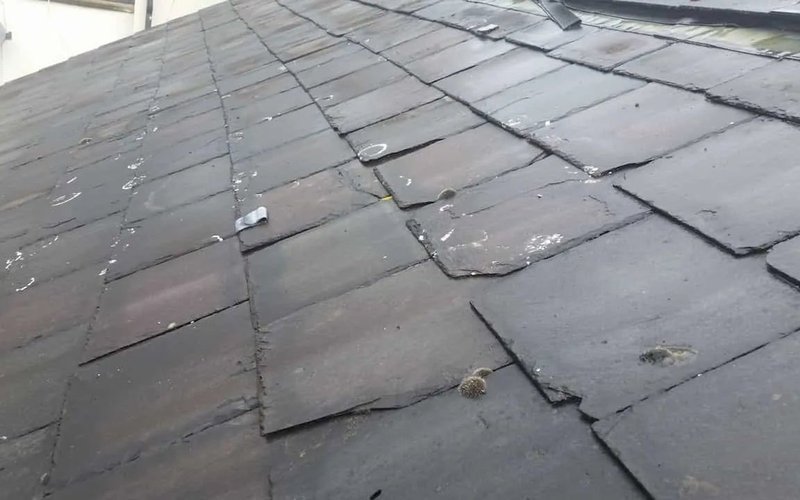
Contact your insurer promptly, describe the damage and ask about emergency repair arrangements. Keep dated photographs and itemised invoices where safe. A leak noticed after bad weather is not automatically proof of insured storm damage; the policy and evidence matter.
Safety comes before the claim photographs
Keep clear of falling tiles, unstable roof edges and sagging ceilings. Do not go onto the roof to count missing coverings or recover materials. HSE identifies falls from roofs and through fragile surfaces as serious roof-work risks. [1]
Move people out of an unsafe area and seek emergency assistance when there is an immediate danger. An insurer's request for evidence is not a reason to take risks. A photograph from a safe position is enough for an initial report; further inspection can be planned properly.
Ask the insurer about the immediate next step
The ABI advises policyholders to contact their insurer, discuss temporary repairs and keep evidence such as photographs and itemised invoices. Check whether your policy includes a relevant emergency-assistance service. [2]
Ask who can authorise work, whether the insurer wants an inspection before permanent repairs and how to submit estimates. Record the date, claim reference and instructions. Where urgent action is needed, explain the situation rather than assuming either that everything is covered or that nothing can be done until a routine appointment.
Build a clear evidence file
Keep the time you first noticed the damage, the rooms affected and a short description of what you observed. Save the original photographs, the contractor's findings, quotations, invoices and relevant earlier repair records.
Separate observations from conclusions. Water entered the bedroom during the evening rain records an event. The storm destroyed the whole roof is a conclusion that needs evidence. Ask the contractor to explain what they found without asking them to describe normal wear as storm damage.
Do not alter dates or remove inconvenient information from the history. A coherent record is more useful than a dramatic but unsupported description.
Why a claim may need a cause-of-damage assessment
The Financial Ombudsman Service considers disputes about storm conditions, the cause of damage and policy exclusions. Its guidance explains that the condition of the property and the evidence can matter; the result is not decided by a single photograph of a leak. [3]
Read the relevant parts of your policy and ask the insurer to explain which cover and exclusions it is considering. A contractor can report the roof condition, but cannot promise that an insurer will pay a claim.
Separate temporary work from the permanent proposal
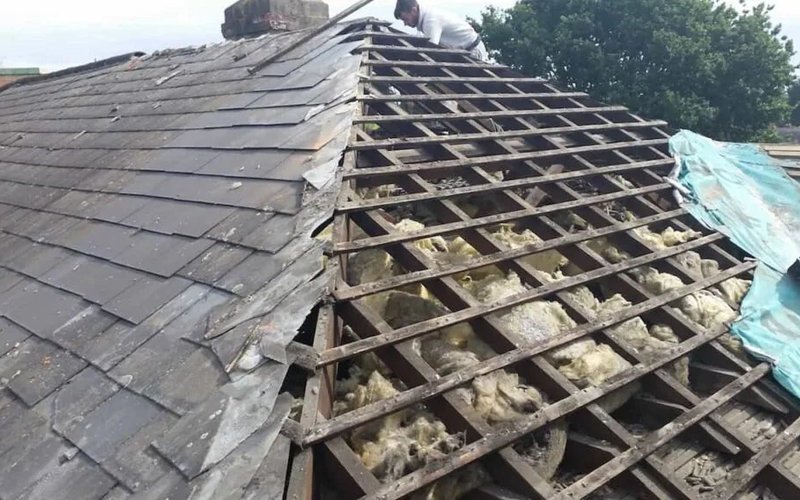
Ask for emergency work and permanent repairs to be clearly identified. An invoice should say what was done; a quotation should say what is proposed. Neither should imply that a wider replacement has been authorised when it has not.
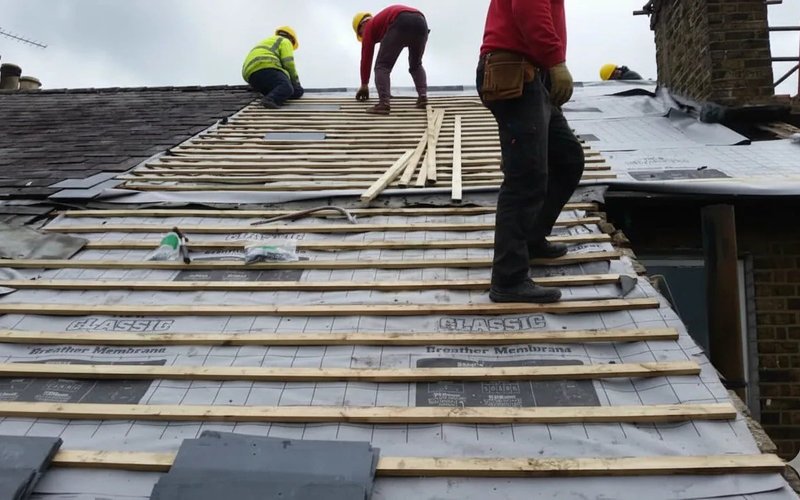
For permanent work, compare the defect, extent, materials, access and exclusions. If the proposal changes after a closer inspection, ask for the revised reasons and scope in writing. Keep the insurer informed where its authorisation is relevant.
Where to turn if the claim is disputed
Ask your insurer for its written reasons and the evidence relied on. Use its complaints procedure before approaching the Financial Ombudsman Service, whose consumer guidance explains eligibility and the next steps. [3]
This article is general information, not insurance advice for a particular policy. Do not accept a roofing quotation solely on the assumption that an unconfirmed claim will pay it.
Speak to Roofcare London about the roof work
Call 020 8485 9639 to describe an active roof problem in our service area. We confirm availability and discuss the assessment and repair scope. Roofcare London does not decide insurance cover or guarantee claim acceptance.
For non-urgent follow-up, include your postcode and the observed damage in the form below. Please do not send full policy documents or other sensitive information through the initial enquiry form.
Sources & further reading
Guidance links supplied with the articles; important rules should be reconfirmed for your property. These sources support the linked factual points; they do not endorse Roofcare London or replace an assessment of your property.
Discuss the work your property needs
Explore the relevant roofing service, or describe the address and problem in the enquiry form below.
Request a roofing quotation