The key point
Keep away from loose material and unstable trees or scaffolding. Look from the ground for missing tiles, displaced ridge pieces, damaged guttering and new leaks. Never climb on a roof to check damage.
External signs to note from the ground
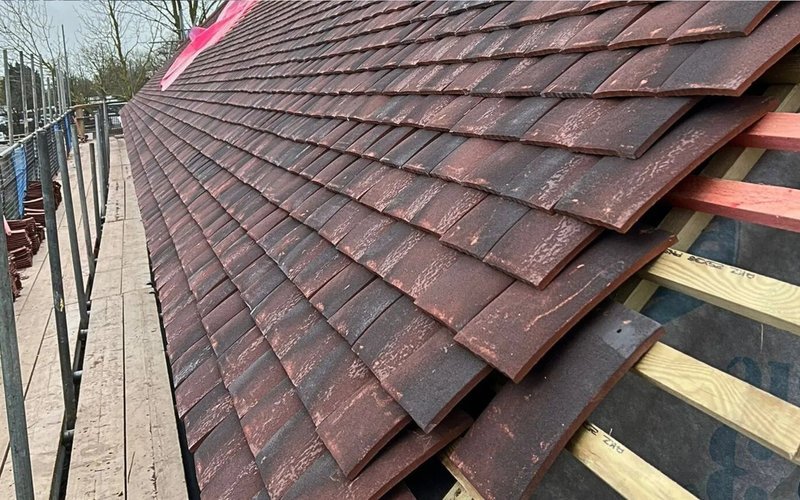
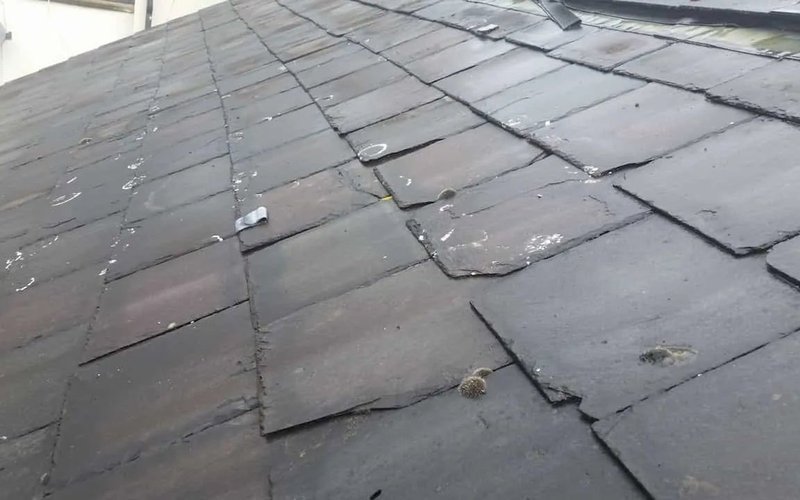
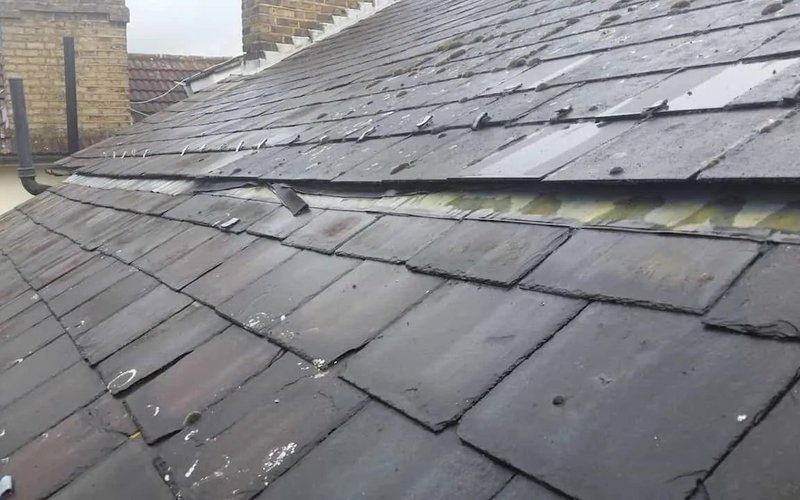
Check whether any slate or tile has moved, whether chimney pots or ridge pieces look unstable and whether gutters have shifted or detached. Note fallen debris, but keep clear of any area beneath loose materials.
Historic England advises periodic visual checks of roofs and maintenance of rainwater goods, including the roofline and chimneys. [1]
What to inspect indoors
Watch for new ceiling stains, drips around roof windows, wet patches close to chimney breasts or damp along an upstairs wall. Record the room, time and weather conditions. A mark appearing only in certain winds can be useful diagnostic information, but it does not locate the exact entry point.
If electrics are wet or a ceiling is sagging, avoid the affected area and obtain the appropriate urgent assistance. Do not disturb suspected asbestos or enter unsafe loft spaces.
Which problems need attention first?
Active leaks, loose materials above paths and significant visible damage are more urgent than a minor cosmetic issue. Use your judgement about immediate danger and contact emergency services when life or serious public safety is at risk. For a repair, provide a clear explanation rather than guessing the cause.
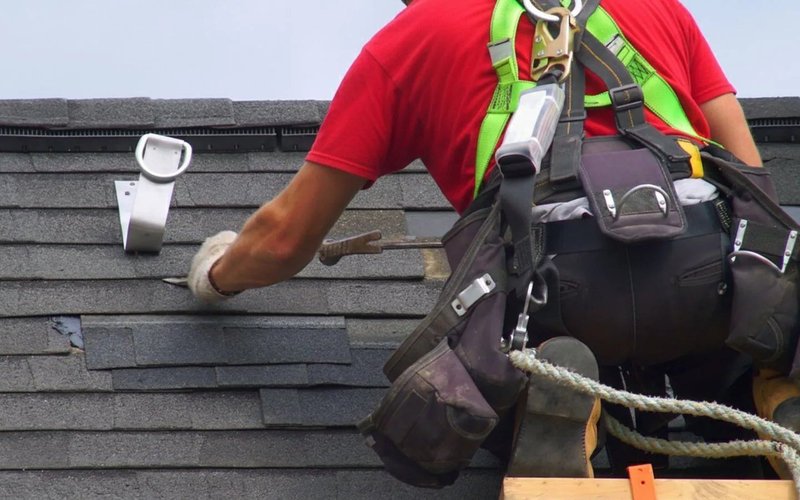
HSE guidance makes clear why ladders and roof access require specialist precautions: falls from height and through fragile surfaces are serious risks. [2]
Insurance, photographs and the next visit
Keep the date and time of the storm and a short inventory of damage. Photograph safe-to-reach indoor damage and external features from a distance. If you intend to claim, check your insurer’s instructions before authorising non-urgent replacement work; reasonable emergency mitigation may be treated differently. [3]
Read our storm insurance guidance and slipped tile guide. To discuss an inspection, visit roof repairs.
Sources & further reading
Guidance links supplied with the articles; important rules should be reconfirmed for your property. These sources support the linked factual points; they do not endorse Roofcare London or replace an assessment of your property.
Discuss the work your property needs
Explore the relevant roofing service, or describe the address and problem in the enquiry form below.
Request a roofing quotation