The key point
Take photographs from a safe ground-level or window viewpoint. Do not walk on the flat roof to test the water or clear outlets. Persistent ponding, leaks or blocked drainage deserve a professional assessment.
What ponding water tells you—and what it does not
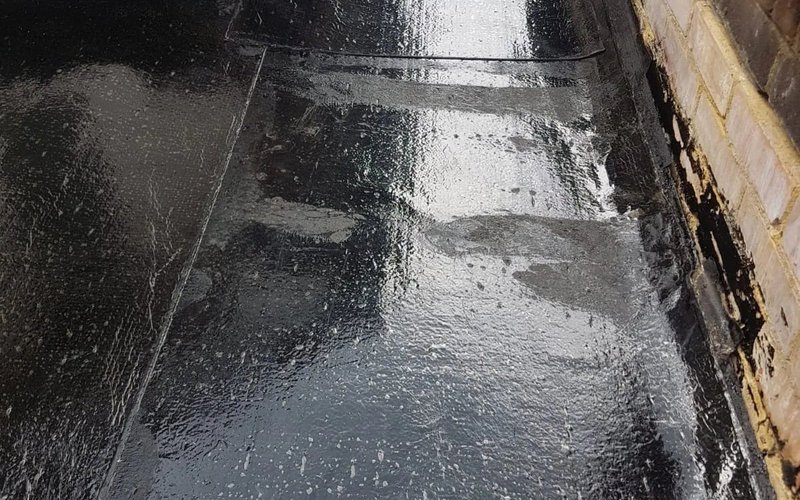
Ponding water describes water remaining in low spots or behind restricted outlets. Water might remain for a time after rain without leaking indoors; conversely, a roof can leak where water rarely collects. A sound diagnosis considers the falls, outlet capacity, roof edge detailing, drainage blockage and condition of the waterproof membrane.
Flat roofing systems vary. Manufacturer information should be checked for the actual membrane and any warranty or installation restrictions; a generic claim about every EPDM, GRP or felt roof is not sufficient. See our flat roof material comparison.
Information to gather without walking on the roof
Record how long water appears to remain after rainfall, whether it is always in the same position and whether the ceiling below has stained. Note gutters, roof outlets, overflow pipes and nearby trees, but do not reach across a roof edge to inspect them.
Where a surface is fragile, even access by apparently stable-looking panels can be dangerous. HSE guidance treats fragile-roof falls as a serious construction risk. [1]
What might a roofer recommend?
The assessment could identify something as straightforward as an obstructed outlet, or something more involved such as insufficient falls, sagging deck boards, failed junctions or aged waterproofing. Repair options depend on the roof structure and covering, not simply on the presence of standing water.
If substantial re-roofing is proposed, check whether Building Regulations approval or insulation improvements apply. Planning Portal explains that replacing roof coverings and thermal elements can trigger requirements in particular circumstances. [2]
Questions to ask in the quotation
Ask what caused the standing water, what work will improve drainage and whether any concealed deck or insulation needs assessment. Request the proposed system, edge and upstand details, access arrangements and what is excluded from the scope.
For material options see flat roofing in London, or roofing permissions if the proposal becomes a larger replacement.
Sources & further reading
Guidance links supplied with the articles; important rules should be reconfirmed for your property. These sources support the linked factual points; they do not endorse Roofcare London or replace an assessment of your property.
Discuss the work your property needs
Explore the relevant roofing service, or describe the address and problem in the enquiry form below.
Request a roofing quotation