The key point
Flashing faults can allow rainwater in around chimneys, roof windows and wall junctions. Water marks are clues rather than a conclusive diagnosis; a roofer should assess the junction and surrounding covering.
What roof flashing does
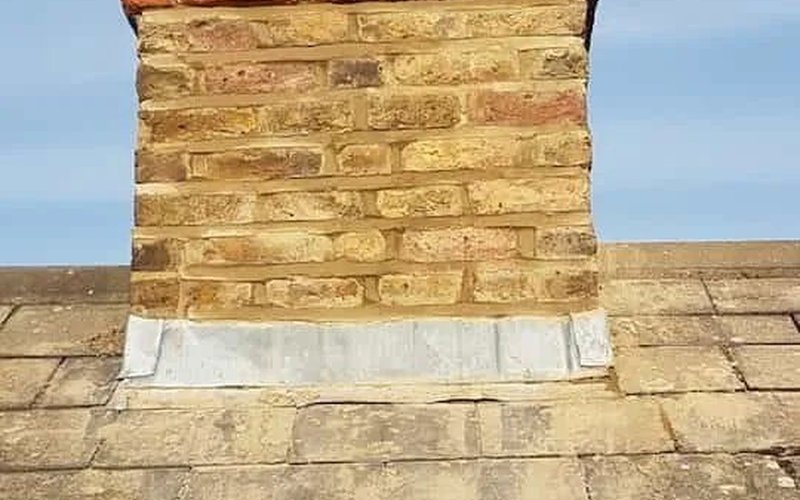
Roof flashing is a weatherproof detail installed at junctions: typically where a roof meets a chimney, vertical wall, roof window or other penetration. A correctly detailed junction must cope with rain, wind and changes in the materials. Historic England describes lead flashings as important and particularly vulnerable elements on older roofs. [1]
Some roofs use traditional lead, while others use compatible proprietary components. The appropriate choice depends on the covering, design and building; no single material is automatically suitable for every junction.
Signs worth recording
Potential clues include a damp patch next to a chimney breast, staining around a roof window, loose-looking stepped flashing or persistent drips where an extension roof meets a wall. Wind-driven rain can also reveal weaknesses that do not show in calm weather.
The place where water appears indoors may be some distance from the entry point. Other causes, including condensation, should not be ignored. SPAB’s rain-penetration advice highlights the need to identify sources before applying repairs. [2]
How flashing repairs should be specified
Ask the roofer to explain whether the issue is with the flashing, surrounding mortar, roof tiles, underlay or another component. A quotation should set out what will be lifted or replaced, how adjoining materials will be protected and how the finished junction will be inspected.
For historic or listed buildings, alterations can be subject to additional consent and conservation considerations. Historic England recommends appropriate materials and a repair-first approach. [1]
What to send in the first message
Give the postcode, identify the junction involved and share a photograph taken safely. Mention any pattern with driving rain, previous repair work or access constraints. Avoid stepping onto a roof or using temporary sealant as a substitute for diagnosis.
Compare the chimney leak guide, leak versus condensation guide and Roofcare’s chimney maintenance service.
Sources & further reading
Guidance links supplied with the articles; important rules should be reconfirmed for your property. These sources support the linked factual points; they do not endorse Roofcare London or replace an assessment of your property.
Discuss the work your property needs
Explore the relevant roofing service, or describe the address and problem in the enquiry form below.
Request a roofing quotation