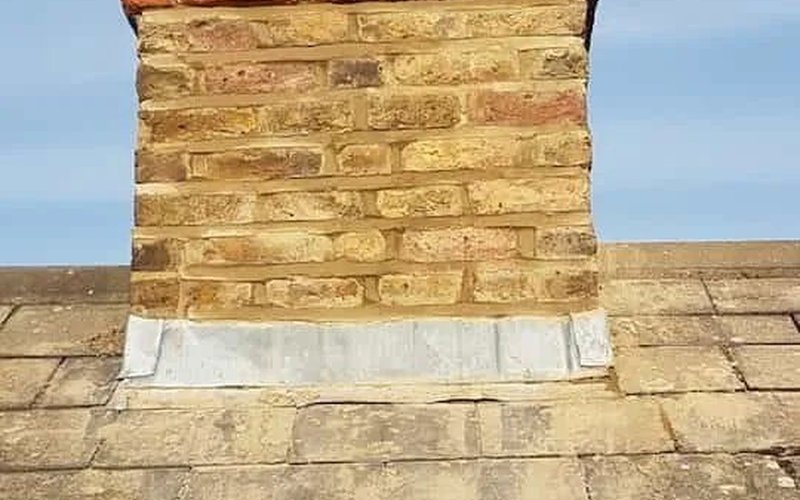
Our chimney flashing repair service deals with leaks where the stack meets the roof covering. If water keeps appearing on the ceiling beside the stack, we can inspect the junction, identify which details have failed and advise whether the existing lead can be secured or needs renewing. A dark patch on the chimney breast can also come from weathered brickwork or a damaged tile beside the stack, so we look at those possibilities before recommending work.
Our chimney repair service is for homeowners who need the source identified and the affected junction put right. You might have lead that has visibly lifted, a leak that returned after someone applied sealant, or a damp patch that appeared weeks after work on the stack. You do not need to diagnose it before calling. What matters is being able to say where the water appears and whether anything on the roof has recently changed.
Why a dry front apron can hide a leaking chimney junction
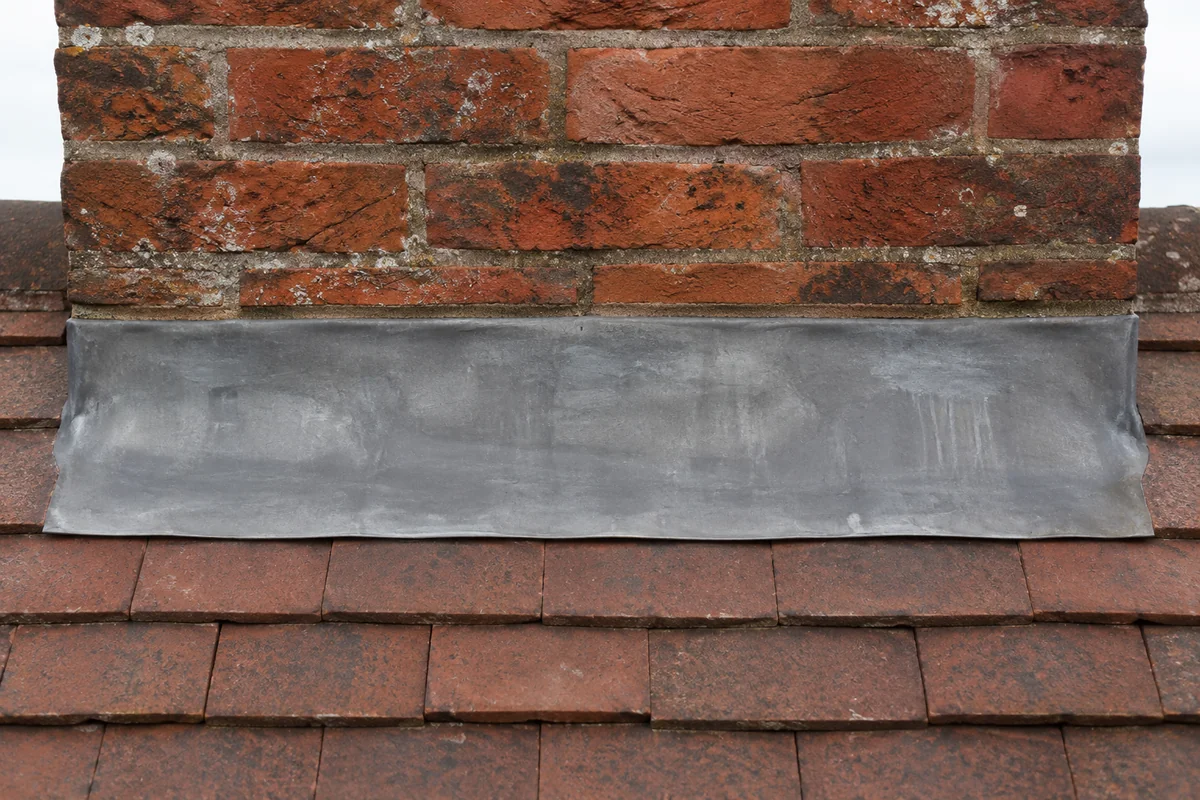
From the pavement, the easiest part of a chimney flashing to see is often the strip across its downhill face. This is the apron. It throws water from the face of the stack out over the tiles. A new apron can look tidy from the road while a separate defect remains on a side or behind the chimney. If someone previously renewed the “front lead”, that is useful information, but it leaves the other faces to consider.
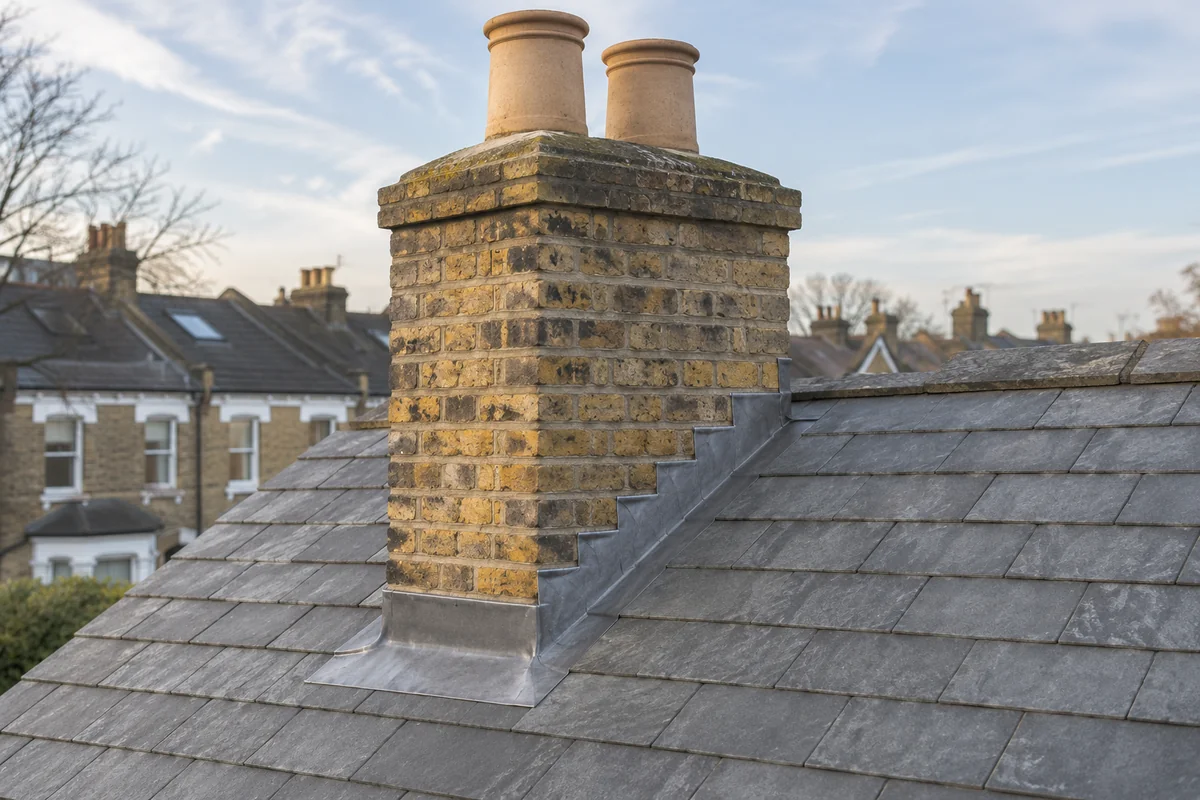
Along the sides of a stack, the roof meets the brickwork at an angle. On many slate and plain-tile roofs, concealed pieces called soakers work with the covering to direct water back onto the slope. Stepped cover flashing protects the junction above them. Other tile profiles use different arrangements. A visible strip of lead at the side tells only part of the story. The way the material integrates with the tiles beneath it matters just as much.
The uphill side receives rain running down towards the stack. Depending on the roof, a back gutter or other weathering detail has to divert that water around the obstruction. It can be difficult to see, even from an upstairs window. A photograph of the downhill face may show no obvious break while this hidden part is damaged or obstructed. This is a common reason to arrange proper access before settling on a repair.
What we want to know about the leak
Is the mark on the chimney breast itself, on the ceiling beside it, or down inside an unused fireplace? Does it appear after prolonged rain, or only when wind drives rain from the rear garden? If there is an accessible room on the floor above, does it show the same pattern? A little context helps us decide whether the roof junction, the masonry or another source should be the first line of enquiry.
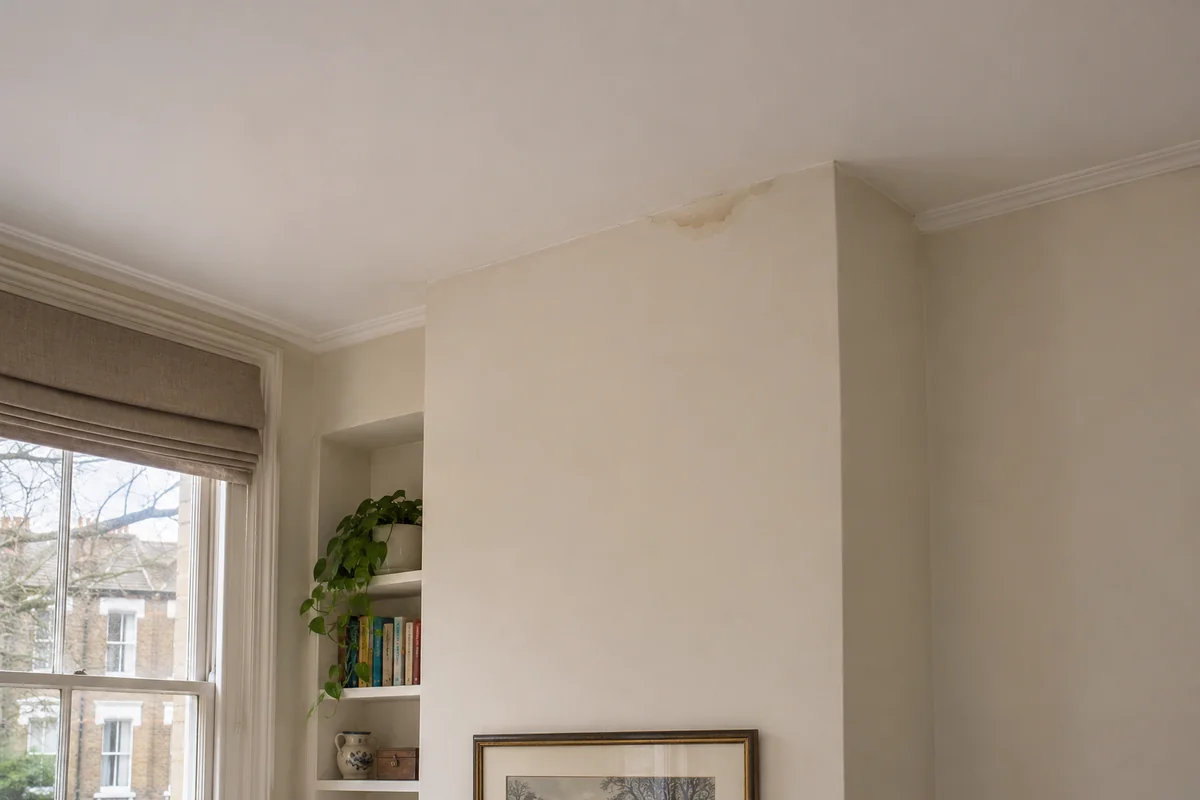
The age of a stain can mislead. A brown ring can stay visible on dry plaster long after an old leak has stopped. Fresh darkening at its edge or a new drip during a particular shower is a more useful sign of activity. Take a picture of the whole wall from a safe position, with a window or room corner in view. It is much easier to place the mark in relation to the stack from that photograph than from an isolated image of discoloured paint.
If the house has more than one chimney, identify the right one from indoors before the visit. A front-room fireplace on the party wall and a rear kitchen chimney can sit at quite different points on the roof. In a converted house, tell us if the affected room is in your flat while the loft is accessible only through another. That helps us discuss the access we will need with the people who can provide it.
When we can repair part of the flashing
A local chimney flashing repair may be possible where a defined length of otherwise sound flashing has come loose from a mortar joint. Another example is damage confined to an apron, with serviceable side details and a sound junction behind the stack. The decision depends on the condition of the surrounding lead, how it is supported and whether the repair can still shed water onto the covering below. Simply pressing a lifted piece flat gives little information about why it lifted.
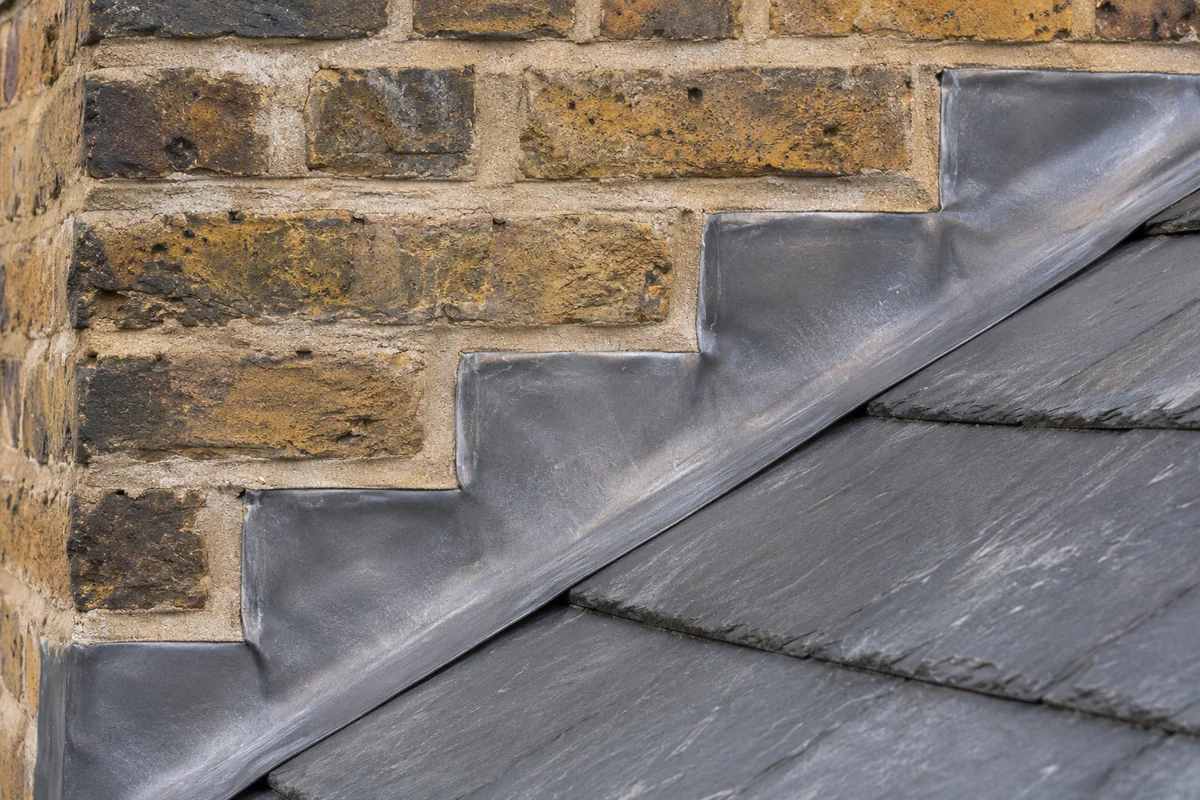
One useful question to ask us is which direction water will take once the work is finished. On the front of the stack, the apron should deliver it over the tiles. At the side, the answer depends on the type of tile and the weathering beneath it. Describing that route helps explain why a short repair can be enough in one place and why an apparently small crack needs a section opened up in another.
Where earlier repairs have relied on repeated coatings, the condition underneath may be hidden. If coating has been applied to both masonry and lead, the most conspicuous crack in the surface is not necessarily the route rain takes. We can discuss what needs to be exposed to reach a sound junction. That gives you a clear reason for lifting a few adjoining tiles if it is necessary, rather than adding another layer to an uncertain base.
When renewal is the better repair
Lead that has split in several places, missing side details, or a back gutter that cannot discharge properly can make a more substantial repair worthwhile. Renewal might cover one face, the junction along both sides or the full perimeter of the stack. We identify the extent because “renew flashing” alone does not tell you whether the hidden uphill detail is included. On a shared chimney, it also leaves the boundary of the proposed work unclear.
Renewal allows the roofer to look at adjoining tiles or slates that may have slipped, cracked or been cut poorly around the stack. If those pieces fail to sit correctly, fresh lead on its own can leave openings for wind-driven rain. The proposal should explain which pieces will be lifted and reinstated, where replacements are needed and how the repaired area will connect to the undisturbed part of the roof.
A previous repair on the same chimney can still be worth preserving. The front apron may have been renewed properly while the older side flashing has deteriorated. If it is possible to join sound work to the proposed repair, there is no reason to discard it on appearance alone. The practical question is whether the connection will remain reliable and whether leaving the existing detail in position prevents access to the actual defect.
When the brickwork needs attention as well
Water can enter through eroded joints higher up the stack and travel down through the masonry. The top of the chimney also has weather-exposed details, including the mortar around the pots. In those cases the damp patch indoors may persist even after the flashing has been renewed. This is why our inspection takes in the visible condition of the chimney as well as its base. We can discuss repointing or associated maintenance where the evidence supports it.
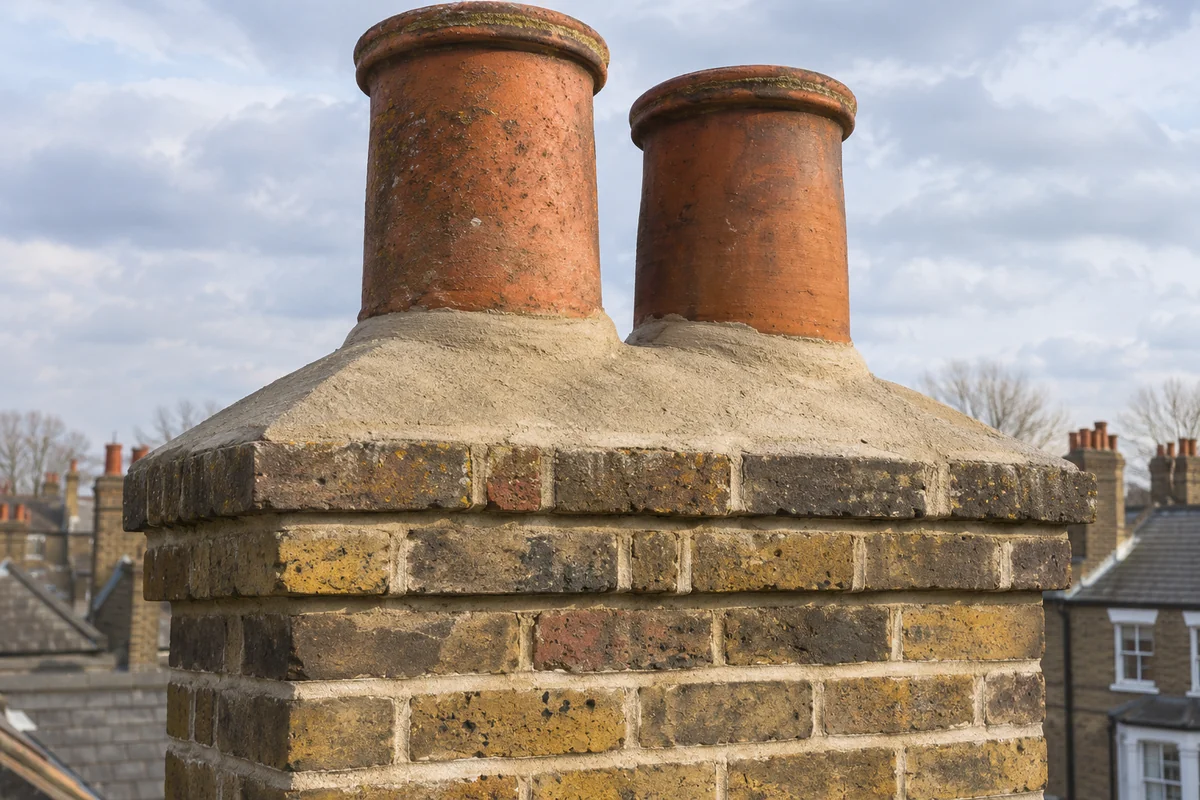
Two defects can coexist. Take a stack with weathered joints on the exposed face and a lifted piece of flashing on the sheltered side. Repairing one does not establish the condition of the other. Ask us to identify the evidence for each item. A clear description might distinguish mortar loss above roof level from an opening at the side of the stack. You can then see why both appear in the proposed work and what each repair is meant to achieve.
An unused fireplace introduces another possibility. Dampness, ventilation and the internal condition of a redundant flue may need separate investigation if the roof and external stack appear sound. Tell us whether the fireplace is used and whether the problem occurs through dry spells. If the evidence points elsewhere, knowing that before commissioning new flashing is a useful outcome of the visit.
Arrange a chimney flashing inspection
For a leak around a chimney in Fulham, Hammersmith, Kingston upon Thames, Surbiton or nearby, contact Roofcare London or call 020 8485 9639. Include your postcode, which room is affected and whether the chimney is at the front, back or side. A photograph of the stack taken safely from the ground and one of the mark indoors give us a useful pair of reference points.
We can assess the flashing and surrounding roof, explain whether a local repair or renewal is appropriate and set out the work before you decide. If water is entering now, see how to arrange an urgent roof repair. If you already have photographs from a previous repair, send them with the enquiry. Knowing which face of the stack was last worked on can be the quickest way to make progress with a leak that keeps coming back.